About
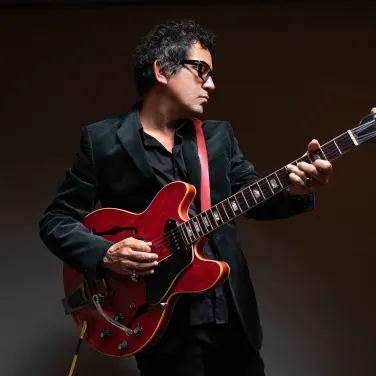
A.J. Croce (born Adrian James Croce on September 28, 1971 in Bryn Mawr, Pennsylvania) is an American singer-songwriter. He is the son of singer-songwriter Jim Croce. Shortly before his father's death in a 1973 plane crash, Croce's family moved west to San Diego, California, where his mother, Ingrid, raised him. At the age of four, Croce was completely blinded, as the result of a brain tumor. Between the ages of four and ten, Croce gradually regained vision in his left eye. Read more on Last.fm
Genres
No info to show.
Frequently Asked Questions
- Why did A.J. Croce go blind?
- A.J. Croce went blind at a very young age due to a serious medical condition. At just four years old, he suffered from a rare brain tumor that caused swelling and pressure around his optic nerve, ultimately resulting in temporary blindness. Despite the challenges, he eventually regained partial sight in one eye, but remains legally blind. This early-life adversity played a significant role in shaping A.J. Croce's musical journey, as he turned to music as a way to express himself and cope with his circumstances. His unique perspective and resilience are evident in his performances and songwriting, making him a remarkable figure in the alternative rock and broader music community. Fans searching for more information about A.J. Croce's blindness are often inspired by his story of overcoming adversity and finding success in the music industry despite his visual impairment.
- Who is in A.J. Croce's band?
- A.J. Croce's band lineup has evolved over the years, reflecting his dynamic approach to music within the alternative rock genre. While he is primarily known as a solo artist, A.J. often collaborates with a talented group of musicians both in the studio and on tour. His live band typically includes skilled instrumentalists on guitar, bass, drums, and sometimes keyboards, complementing his own virtuosity on piano and vocals. Past and present members have included acclaimed musicians such as bassist David Barard, drummer Gary Mallaber, and guitarist Michael Bizar. These collaborators bring a rich, diverse sound to A.J. Croce's performances, blending elements of rock, blues, and soul. Fans attending an A.J. Croce concert can expect a high-energy show featuring both original songs and classic covers, all delivered by a tight-knit, passionate band dedicated to musical excellence.
- Does A.J. Croce play Jim Croce songs?
- Yes, A.J. Croce does play Jim Croce songs during his performances, honoring his father's celebrated musical legacy. While A.J. has built a successful career with his own distinctive sound in alternative rock, he often includes renditions of Jim Croce's classics such as "Operator (That's Not the Way It Feels),"
- Does A.J. Croce sing his dad's songs?
- Yes, A.J. Croce sings his dad's songs as a special part of his live shows and tribute performances. As the son of legendary singer-songwriter Jim Croce, A.J. has embraced his father's musical heritage while forging his own path in the alternative rock genre. During concerts, A.J. often performs beloved Jim Croce songs, offering fresh arrangements and heartfelt vocals that honor the original spirit of the music. He has even toured with special tribute concerts like "Croce Plays Croce,"
- How did Jim Croce's son lose his sight?
- Jim Croce's son, A.J. Croce, lost his sight due to a rare medical condition during his early childhood. At the age of four, A.J. suffered from a brain tumor that led to swelling and severe pressure on his optic nerve. This medical emergency resulted in complete blindness. Although he eventually regained limited vision in one eye, A.J. remains legally blind to this day. The loss of his sight at such a young age profoundly shaped his life and musical career, driving him to develop his talents as a pianist, singer, and songwriter. A.J.'s story of overcoming the obstacles associated with vision loss continues to inspire fans and aspiring musicians. For those seeking details on how Jim Croce's son lost his sight, it's a testament to resilience and the power of music as a source of healing and self-expression.